
THINK AVIATION TRAINING / WILSON AIRPORT
Impact that reaches
from the classroom to the cockpit
We strengthen the people, decisions and systems behind safer flight operations — and open the doors of aviation to the next generation.
ATO No. 22
KCAA-approved non-flying aviation training organisation
3
Flight simulation training devices
Wilson Airport
Nairobi-based classroom and simulation training
01 / SECTOR TRANSFORMATION
Aviation depends on the people passengers never see.
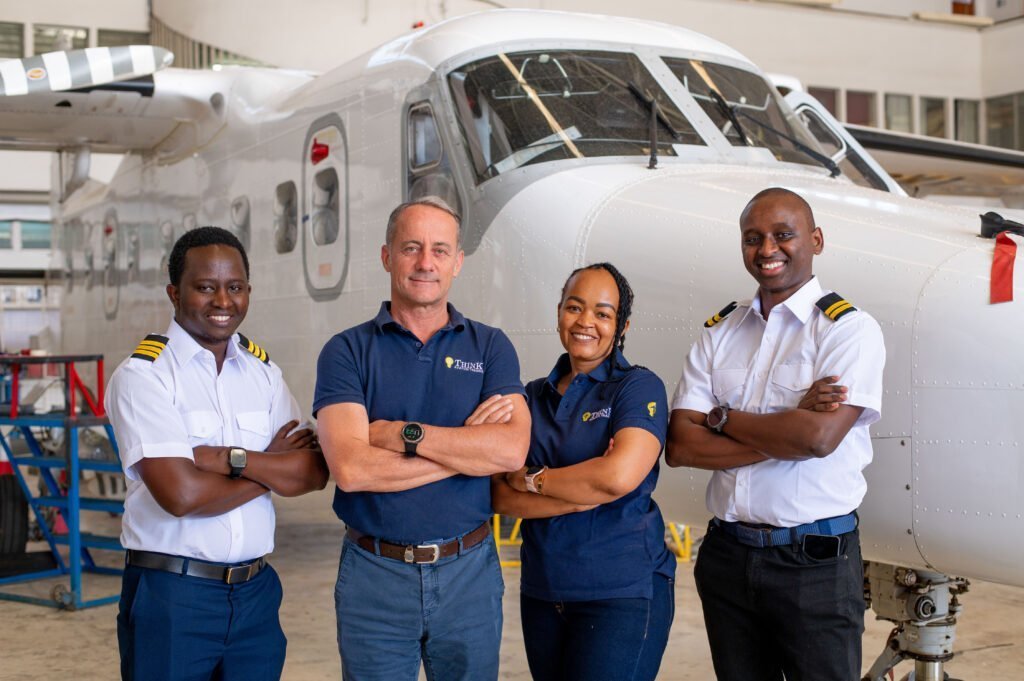
An aircraft is only one part of the safety system. Dispatchers, safety managers, auditors, security professionals, instructors and maintenance teams shape the decisions that make reliable operations possible.
Think supports this operational backbone through practical instruction, technical training and access to aviation simulation at Wilson Airport.
02 / SAFETY AND QUALITY
Safer operations begin long before take-off.
Strong safety performance is built through reporting cultures, effective oversight, crew coordination and decisions made under pressure.
SMS / Safety management
Hazard identification, safety risk assessment, reporting and safety assurance.
QMS / Quality management
Auditing, corrective action, compliance monitoring and continuous improvement.
CRM / Crew resource management
Communication, leadership, workload management and threat-and-error management.
HFM / Human factors
Fatigue awareness, maintenance communication and error prevention.
AUT / Aviation audit techniques
Audit planning, evidence gathering, root-cause analysis and findings follow-up.
DGR / Dangerous goods
Competency-based handling, documentation, acceptance and safe carriage.
AVSEC / Aviation security
Protective security awareness, preventive controls and operational response.
CIT / Core instructional techniques
Strengthening the quality and consistency of aviation instruction.
03 / FLIGHT OPERATIONS OFFICERS
Safety starts at the dispatch desk.
Before departure, flight operations personnel evaluate weather, NOTAMs, route constraints, fuel, alternates and operational requirements. Competent dispatch decisions give crews an essential layer of operational support.
Think’s Flight Operations Officer training links technical knowledge with decision-making, operational control and professional readiness. Licensing and privileges remain subject to the applicable authority requirements.
04 / FSTD OPERATOR
Rehearse the unexpected. Reduce risk in the air.
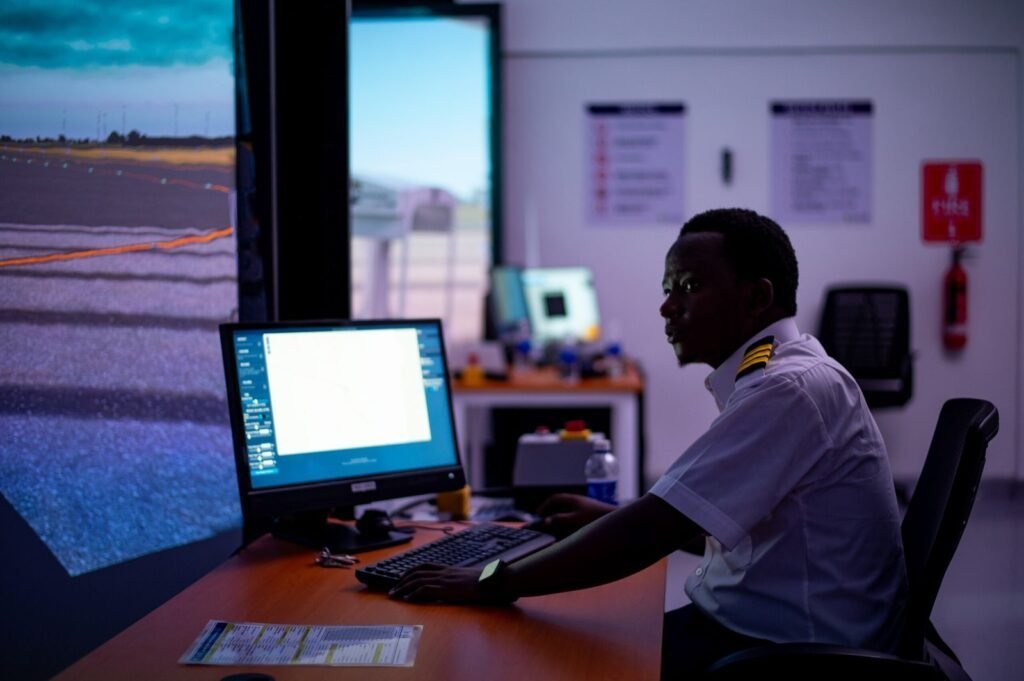
Simulation creates a structured environment for instrument procedures, abnormal scenarios, crew coordination and debriefing. Instructors can pause, repeat and assess events that would be impractical or unsafe to recreate in aircraft.
Cessna 172S
G1000 Nav III · Foundation and instrument procedure training
Cessna 208B EX
G1000 NXi · Turboprop procedures, IFR and systems familiarisation
Dornier 228-212
Classic cockpit · Full-motion multi-engine and crew training
Formal training credit depends on the device’s applicable qualification, regulatory approval, approved syllabus and authority acceptance.
05 / FSTD ASSURANCE & STANDARDISATION
Simulation quality is an operational discipline.
A training device earns trust through documented configuration control, repeatable validation, qualified personnel and reliable maintenance — not visual realism alone.
01 / EVIDENCE
Device configuration and records
Maintain traceable software and hardware baselines, discrepancy records, qualification evidence and controlled technical documentation.
02 / CONTINUITY
Navigation data and currency
Plan AIRAC updates appropriate to each device and programme; record installation, verification, and exceptions before training use.
03 / COMPETENCE
Instructor standardisation
Brief instructors consistently, assess scenario delivery, document recurrent development and close training feedback loops.
Programme credit and qualification levels are determined by the applicable authority approval and current device status. This section describes the assurance approach, not a claim of additional regulatory credit.
05 / KIDS INTO AVIATION
A child cannot aspire to a career they have never seen.
The aviation talent pipeline begins with exposure. Seeing a cockpit, meeting an instructor and understanding the people behind every flight can turn curiosity into a credible ambition.
Our vision is to bring accessible aviation experiences to more young people — girls and boys, urban and rural schools — through educational visits, guided simulator sessions and conversations with aviation professionals.
School outreach, sponsorships and pathway programmes are opportunities for collaboration; availability and programme scope should be confirmed with Think.
06 / THE PATHWAY
From first exposure to professional competence.
Discover
School engagement, introductory talks and supervised aviation experiences.
Learn
Foundations in safety, operations, systems and the aviation workplace.
Practise
Scenario-based learning, instructor feedback and simulation.
Progress
Advanced training, workplace development and regulatory pathways.
07 / PROFESSIONAL LEARNING
Training that serves the entire operation.
Think delivers classroom and online learning in safety management, operational control, security, human factors, audit practice and instructor development. Training can integrate case studies, written assessments, facilitated group discussion and practical scenario reviews to connect knowledge to on-the-job decisions.
For aviation professionals
Build competence in the disciplines that support safe and compliant aviation operations.
For operators and employers
Develop tailored recurrent learning and organisational capability alongside operational needs.
For instructors
Turn technical expertise into structured, assessable learning experiences.
For emerging talent
Understand aviation’s wider career landscape beyond the flight deck.
09 / HUMAN PERFORMANCE & OPERATIONAL RESILIENCE
Good judgement is trained before the difficult day.
Technical procedures matter. So do the decisions, communication and workload management that determine whether they are applied correctly when circumstances deteriorate.
CRM / TEM
Threat and error management
Scenario-based briefings that challenge assumptions, reinforce communication and practise effective cross-checking.
HFM / FATIGUE
Human factors in practice
Explore fatigue, distraction, task saturation, maintenance handovers and organisational influences on human performance.
REVIEW / LEARN
Debrief and continuous learning
Define expected competencies, observe behaviour, debrief with evidence and assign targeted follow-up rather than relying on attendance alone.
Example learning activities: simulated deteriorating weather, an ambiguous NOTAM, a checklist interruption, a dispatch change or a controlled abnormal-procedure exercise.
08 / IMPACT MEASUREMENT
Impact should be demonstrated, not merely declared.
Our impact framework connects participation to operational capability. These are recommended indicators for future transparent reporting; they are not presented as audited results. Suggested monitoring includes course completions, competence-assessment results, simulator utilisation, recurrent-training adherence, school participation, instructor standardisation, trainee feedback and corrective-action closure. Establish baselines before making outcome claims.
Training reach
Learners trained, organisations served and courses completed by year.
Learner outcomes
Assessment completion, proficiency gains and workplace follow-up.
Simulator utilisation
Sessions, training hours, scenarios and instructor-led debriefs.
Youth access
Schools engaged, students reached and progression opportunities.
12 / SCHOOL & COMMUNITY ENGAGEMENT
Turn curiosity into a realistic aviation pathway.
Aviation outreach should move beyond a one-off photograph: each visit can introduce careers, connect classroom subjects to operations and show learners how training actually works.
DISCOVER
Curated school experiences
Age-appropriate career conversations, introductory simulator exposure and guided discussion of aviation safety and teamwork.
INCLUDE
Broaden participation
Engage girls and boys, schools beyond Nairobi and learners who may never have met a pilot, dispatcher or aviation engineer.
PROTECT
Safeguarding first
Use supervised access, approved photography and parental permissions where needed, accessibility planning and age-appropriate activities.
School visits and outreach partnerships are offered as potential collaboration formats; dates, places, safeguarding arrangements and programme availability should be confirmed with Think before publication.
09 / COLLABORATION
A stronger aviation sector is a shared responsibility.
We welcome dialogue with airlines, charter operators, regulators, schools, instructors and industry partners interested in safety education, workforce development and responsible youth exposure.
Learn with purpose. Train with technology. Operate with confidence.
Think Aviation Training · DLCO-EA Hangar, Wilson Airport, Nairobi